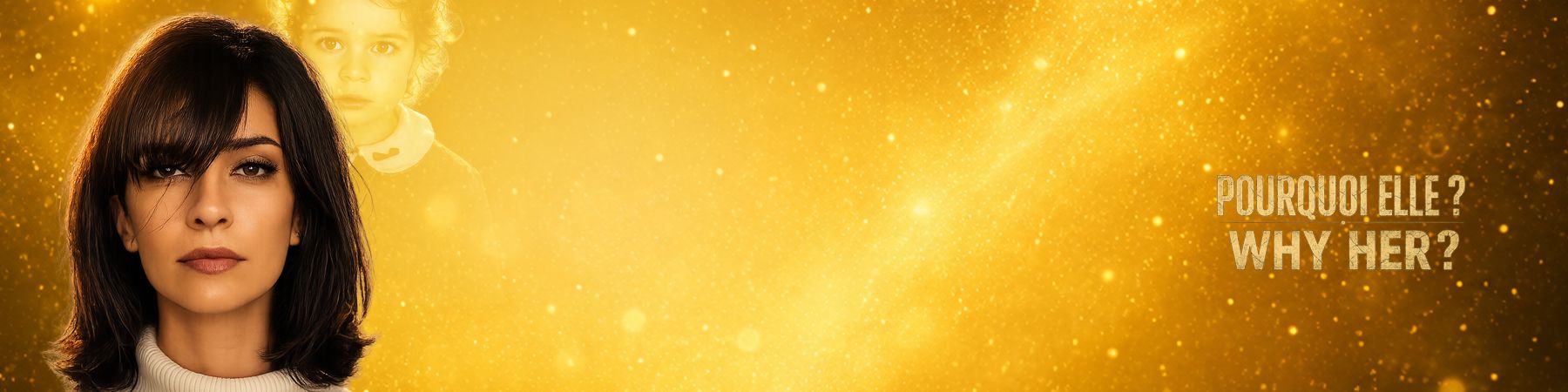
School Bullying and LGBTQ+ Youth: Celine Aviani’s Story of Resilience
Some words hurt. Some looks make you disappear. And some silences stay with you for a lifetime.
School bullying is not just about what happens in a classroom. It is about what happens inside a child when they start to feel that they do not belong, that something about them is “too much” or “not right”.
In this HappyGayTV documentary, we meet Celine Aviani. Not to sensationalize her past — but to understand it, to learn from it, and to show that even the deepest wounds can become a source of strength.
- Understanding school bullying
- Why LGBTQ+ students are more vulnerable
- Celine Aviani’s journey
- A method that really works
- Lolita Rivé and emotional education
- Why humor matters too
- Frequently asked questions
- How to take action
Understanding school bullying: when emotional violence becomes everyday life
School bullying is not a single argument or a bad day. It is a pattern — repeated teasing, humiliation, exclusion and pressure that slowly erodes a young person’s confidence.
Over time, it can change the way a child sees themselves, their body, their voice and their right to exist.
Why LGBTQ+ students are more vulnerable to bullying
Children who are seen as “different” — because of the way they look, speak, express themselves or love — are often targeted first.
For LGBTQ+ youth, school bullying can become a daily battle against shame, fear and isolation. That is why visibility, understanding and protection matter so much.
Celine Aviani: from bullied child to school life professional
Celine Aviani was bullied from early childhood. Too tall. Too different. Too visible.
Like many young people who are targeted, she learned to stay silent. Fear, obsessive thoughts and self-doubt became part of her daily life.
Today, she is both a singer-songwriter and a school life professional who works with students every day. She knows this reality from the inside — and she knows how to act on it.
Her song “Un Nouveau Monde” (“A New World”) carries that message of hope and dignity.
A method that works: the shared concern approach
This documentary does not stop at pain. It also brings something rare: a real solution.
Celine explains how she uses the Shared Concern Method — a restorative, dialogue-based approach that helps stop bullying without creating new victims.
It is about listening, responsibility and rebuilding safe relationships. And in the show, Celine shares how it changes lives, one situation at a time.
Lolita Rivé: teaching emotional and relational literacy
Alongside Celine, Lolita Rivé offers another essential perspective.
She shows how teaching children about emotions, respect and relationships is one of the strongest tools we have to prevent violence and harassment in schools.
When children learn how to understand themselves and others, they become safer — and so do their classrooms.
Taking a step back: why this story also needs humor
Some stories are heavy. They need space to breathe.
That is why this show also welcomes Roselyne — a playful, slightly absurd character who reminds us that even in the darkest topics, laughter can help us regain perspective and strength.
Staying until the very end of the show means taking this full journey: feeling, understanding, and then finally breathing again. And as always on HappyGayTV, something special waits for you after the credits.
Frequently asked questions about school bullying
How do I know if I am being bullied?
If hurtful behavior happens again and again and makes you feel afraid, ashamed or isolated, it is not “just a joke”. It is bullying — and it deserves to be taken seriously.
Can bullying really be stopped?
Yes. With the right methods, listening and support, schools can change toxic situations and create safer spaces for everyone.
How to take action and continue the journey
If this story touched you, you do not have to stay silent.
You can watch another Q&A show with Celine Avianiand members of the HappyGayTV community, where real questions and real voices go even deeper.
You can also join the HappyGayTV Clubto access exclusive clips filmed especially for our community — moments you will not find anywhere else.
And you can speak. Through the HappyGayTV Hot-Line, you can leave a voice message or a video: a story, a question, a thought, or simply a few words. Here, you will be heard.
This page will continue to evolve with the voices, stories and solutions shared by the HappyGayTV community.
Because bullying is never a destiny. Because speaking can change everything. And sometimes, one single message is all it takes to begin healing.
© HappyGayTV - January 2024 - February 2026
Show transcript
Céline Aviani: From Bullying to Recovery
[Singing] HappyGayTV [Speaking] The bullying also led me to develop chronic anxiety. Because staying silent kills! Nobody deserves to live with that much suffering! - Today, the shocking and deeply moving story of Céline Aviani, her experience and her insights into understanding and tackling bullying at school. Then, in the second part, Lolita Rivet from the blog
"What's Love, Miss?" shows us how relationships and sex education can stop bullying from an early age. Then your audio and video messages sent to the Hot-Line. And of course, Roselyne, to bring a smile to your face. - Yes, Marco, we need to talk again about my pay rise. And don't try telling me
I'm harassing you, just because this is the 14th time I've asked you. That won't work on me!
- Hello, my lovelies, hello everyone! Today, we've got something very special for you, something that moves you, opens your eyes and does you good. You're about to discover a deeply personal portrait of Céline Aviani. Many of you already know her from a previous show or her songs with a message. But what you're about to see is something quite different.
It's a deeply personal, profound story, full of courage. Céline was bullied from nursery school onwards, the tallest in her class, different... She became a target. And for years, she kept it all to herself. Until the day her mother found out what was happening. Today, Céline is an artist, a CPE, an advocate, followed by tens of thousands of young people.
And what makes her journey so powerful is how she transforms what she's been through into something meaningful, something uplifting. She speaks to children, parents and teachers, to everyone looking for answers or who don't dare speak up. And then there's her music, her song, "Un Nouveau Monde", a powerful, heartfelt track, recorded at Francis Cabrel's studios.
A song that says being different isn't a weakness, that it can actually become a strength! This portrait is about understanding, opening our eyes and helping those who need it. Really. And reminding us that a new world, yes, is possible. Now, over to Céline.
Her story!
Bullied from Childhood: Céline’s Story
- My name is Céline Aviani, I'm a singer-songwriter, and I've just released a single called "Un Nouveau Monde" which is in a French pop style. [Singing] Draw me a new world Where loving each other becomes the norm [Speaking] I felt the need to write this song because I'm working on an EP, and on that EP, let's say, it's the first chapter of the story
I've come to tell, and it's all about the emotional scars. What traumatised me was bullying. So it was obvious to me that I needed a song that talked about that subject. [Singing] I'm not fashionable, a little too tall But what can I possibly do about it,
do about it? [Speaking] I'm very tall, I'm over 1.80 metres, and I was a big baby at birth. I think I weighed over 4.2 kilos, or 4.3, and I was over 54 or 55 cm long. And I've always been very tall. Seriously, I've always towered over everyone! I think I've been this height,
so now I'm 1.82 metres, more or less. I must have been 1.78 metres since I was in Year 9! It's really hard being the tallest girl in school. It's very hard to be noticed when all you want is to be invisible. And they called me the giraffe, the Twin Towers.
Honestly, every kind of nasty remark you can imagine about my height, when it's just my height. [Singing] Their words chill me, their voices erase me But how can I find my way back, find my way back? What am I going to do? [Speaking] One of my earliest memories is twisting my ankle because I was being chased
by girls who were picking on me. I fell, twisted my ankle and had to wear an ankle brace for years after that. And what actually made me break down... I was in Year 5, and I was regularly insulted, particularly by one girl who kept insulting me, putting me down and humiliating me. And the thing is, I never talked about it at home. At school, I thought they could see it because
things were happening in class. So I thought the teachers could see it, but actually, nobody did anything. And what broke me, I think, was not speaking up, not speaking up to my parents, not telling them what was happening. Because of that, I went through it alone for months! And at some point, no human being can endure that!
You can't stay on your own when you, when you're going through violent experiences, when you're being mistreated, because staying silent kills! Because no human being is meant to endure so much violence! [Singing] What am I going to do? To stop myself running away, to get through this Without getting hurt? What can I do? To keep from giving in, To stop myself
from spiralling [Speaking] I remember thinking something was wrong! I remember that. But I also remember thinking I wouldn't say anything, because my parents were overworked at the time. And I remember wanting to go and tell them, then thinking, "I won't go!" There, I remember that moment in the hallway, thinking to myself, "I have to stay quiet." And I think it's important to remember
that a lot of children and teenagers protect their parents. I protected mine when I shouldn't have had to. [Singing] What am I going to do? To stop myself falling apart, to rebuild My life? [Speaking] But actually, my mother realised something was wrong because I was pulling my hair out. You see, it had become such a source of suffering for me,
being bullied, and feeling so awful, that I would pull out my hair and hide it in a container. I'd hide my hair, these clumps of hair that I'd pulled out. And one day, my mother emptied that container, which she hardly ever emptied, but she did empty it from time to time, and she found loads of hair... And so, from that point onwards, the bullying
also led me to develop chronic anxiety. So, I mean, for, I don't know, maybe ten years, I lived with chronic anxiety and developed obsessive-compulsive disorder. So I kept pulling my hair out for a very long time. For example, at night, I felt the need to go to the loo dozens of times before going to bed! And it's really hard because, how do you live with obsessive-compulsive symptoms
and manage to deal with them every day? And get other people to understand them. So it was really difficult. But it was simply the outward expression of overwhelming suffering, because I no longer knew who I was! And that's also what this album and this project are about, rebuilding myself, really. From that moment on, I broke down. I didn't know who I was. I was in so much pain
in my head that I was going to have to rebuild myself, because I couldn't carry on suffering like that. Nobody deserves to live with that much suffering! So if you're watching me and you're suffering, nobody deserves to live like that! Because violence always has consequences, it always leads to something afterwards. [Singing] Draw me
A better world A little tenderness Without fear Draw me People with values Colourful dreams Within our hearts [Speaking] For a long time, I had a very difficult relationship with school, right up until the end of lower secondary school. And it's quite funny now to think that
I'm a CPE. But this career, gradually, as I progressed with my music, became more and more obvious to me. And actually, I thought it was wonderful, really, to support young people and be able to help them. Whether through my music or through my work as a CPE, I want to help. And so, if I can do that, if I can stand up for causes like bullying, fighting homophobia, discrimination, and...
Well, fighting transphobia and all these issues, then I'm delighted to be able to do so through my songs and through my work. [Singing] Draw me a new world Where loving one another becomes the norm Draw me another world
Turning Her Story Into Music
[Speaking] Originally, I wasn't even planning to become an artist. I'd always played the piano, done drama and dancing. But I wanted to become a museum curator in castles, well, an art curator in museums. And actually, music somehow found its way back to me, because I was missing singing when I started my higher education studies in Toulouse.
And my mum said: - "Listen, I'll enrol you at the conservatoire, in the choir." And she said: - "You're right next to the conservatoire, I'll sign you up." But actually, she made a mistake. She signed me up for a classical singing audition. So I ended up auditioning for classical singing, without ever having studied it. And then the singing teacher told me: - "You really should join the conservatoire,
but for contemporary music." So I ended up applying for an audition in contemporary music, and having to write a song overnight because applications were closing the next day. And that's how my journey began. And so I got into the conservatoire. Writing and composing were a revelation for me. It was a real revelation, and I said to myself: "I want to be an artist. That's what I want to do."
[Singing] But where will I find my place? Find my place? [Speaking] That's also why it's important for me to write this song, because I have a very large following of young people, especially on social media, and it mattered to me that they could see themselves in this song. So I tried to write it as broadly as possible, because I know that bullying affects a lot of people, particularly
gay people. Fatphobia is also a major issue in bullying. Basically, anything that might be perceived by other people and by society as being different. So it was important for me to address that subject. But what I really wanted to do with this song was tell young people that I'm with them, and that it's up to us, as adults, to take action to fight
bullying and every form of bullying. [Singing] I don't know the rules, I'm not popular But why should you even care, why should they care?
Being Different Isn’t the Problem
[Speaking] There's a researcher called Jean-Pierre Bellon, who specialises in education and bullying, and he says that, actually, for far too long, we thought these young people... We actually looked at them in terms of what society considered a difference. I don't know if I'm being very clear, but for example, when it comes to homosexuality, when young people are subjected to
homophobic remarks, it's actually society that has a problem! Not them! And I think we need to turn the problem around. I mean, for far too long, we've said: - "Oh, he's different! That's why he gets bullied." No, no! He's not different! It's society that has a problem with that issue.
So actually, it reveals a problem in other people. And I think we need to change the way we look at things. [Singing] How do I face this? But where will I find my place? Find my place? Their words chill me, [Speaking] Actually, we shouldn't define anyone by their sexuality, or by their religion, or by anything else. Actually, we should always try to
see someone for who they are on the inside. And I think that's what matters most. And I have lots of friends who are gay today, and for whom things were very difficult in the past, and who today are incredible human beings and people who are proud of themselves, who are true to themselves and will play an important role in society, through their personalities
and through what, perhaps, when they were younger, had led people to mock them and reject them, and which today, I believe, has become their strength. And I believe that everything other people see as a difference they can single someone out for, well, I believe it's actually a strength, and I believe that's what will make them incredible human beings, for others and for society.
[Singing] What can I do? To stop the pain, to finally grow up Without screaming Draw me a new world
Why Some Children Become Bullies
[Speaking] We know there are young people who often have themselves been bullied in the past, and who then repeat that pattern, and become bullies themselves. I think there are also young people who perhaps grew up in environments where insults are thrown around, where people are quick to mock others, and so they repeat those same patterns, even at school. And unfortunately, I think, we also tend to attribute
a difference to someone, to a pupil, and then single them out because of it. And I think the group also plays a very important role, because as soon as there's a peer group, some young people start behaving differently, and to gain acceptance from the others, they may end up developing behaviours that can eventually lead to bullying. [Instrumental music]
In any case, I think that we, as adults, should always think in terms of... Nothing ever justifies bullying, actually. Nothing justifies it! I mean, someone might be different, gay, or, I don't know, have a disability, have some difference or be more vulnerable, be more introverted, none of that ever justifies bullying. And I think we need to tell ourselves
that we mustn't think: - "Oh yes, but that makes bullying him acceptable." Perhaps it made the bullying more likely, made it easier for people to target them, because the pupil might not necessarily have the confidence to say: - "No!" To say: - "Stop it! Be quiet!" But that's where we, as adults, must step in and keep them safe. And I really think that young people
who are watching us, who are watching me, especially those who are gay, or who are finding it really difficult to fit in with others and feel they belong, I think you need to tell yourselves that they're the ones with a problem, not you, and that it's up to us adults to really listen to you and help you. So you need to go to any adult you trust, whether it's a teacher, a school nurse,
or a CPE. You need to go and tell them what's happening to you. And I believe it's by speaking up that things can start to change. So we adults, we really have a role, along with the French education system, in helping every young person and listening to them. Actually, I believe in zero violence. What I say as a CPE is that it's zero violence.
Whether it's bullying or not, you can't insult someone, you can't hit them or do anything that humiliates a young person. [Singing] Draw me another world I need love still
The Shared Concern Method
[Speaking] So, bullying is defined as acts, acts of violence, really, that are repeated. It's important that repetition is part of the definition. It can be insults, it can be physical attacks, it can be mockery. In any case, something that happens repeatedly. What we, what we see when dealing with bullying at school is that we need to support both the young people who are being bullied and those
who are doing the bullying. I mean, in any case, there's a problem with the relationships between everyone, and we need to support everyone involved so that communication and relationships can become easier and, once again, let's say, positive, rather than harmful. So we have a duty to support everyone! What we try to tell adults is that even if a pupil is bullying others,
we need to help them. We need to support them because either they're suffering themselves, or, at some point, there are... relationships they have with other people that are harmful. So we need to support everyone. [Singing] Draw me a new world Where loving each other becomes the norm [Speaking] How do we keep pupils safe from bullying? It's quite an unusual approach,
and it doesn't involve sanctions or punishment, at least not initially. In other words, the adults' role is to approach the pupils who are bullying others and say to them: - "Listen, we've noticed that a pupil isn't happy in class, we feel they're not doing well. Have you noticed anything?" And then, really, we're appealing to the young people's empathy, to their mirror neurons, and basically saying:
- "Now, look around you, look at how that young person behaves. And we'll see you again in a few days, and we'll see whether things have changed." And actually, we change the way the bully sees things. We get them to look at the other person and to observe their classmate. And perhaps realise that their actions towards that person can cause them
pain and sadness, and put them in a difficult position. And so, get them to change their attitude themselves, without saying: - "We know what you're doing, we know you're bullying this or that pupil, so we're going to punish you, we're going to sanction you." Before it gets to that point, we try to get them to realise for themselves that they're hurting another pupil, and therefore stop, of their own accord, what they're doing.
So we encourage the pupil who's doing the bullying to feel they have a role to play in this situation, and to help the other pupil feel better. Basically, what we need to focus on is our concern for that particular pupil. So that's roughly the approach being trialled, and in any case, it's had very good results, particularly in Luxembourg,
where they've been trialling it for a few years. I think their success rates are quite high. [Singing] I need love still Draw me a new world
Empathy, Mirror Neurons and Her Role as a CPE
[Speaking] Neuroscientists and researchers have found that mirror neurons play a very important role in the development of empathy. They're neurons that we all have in our brains, and they play a very important role in how we relate to the world, particularly in empathy. For example, when I yawn, often, in response, someone in front of me will yawn too. And that's actually mirror neurons
doing their job, and essentially mimicking and copying the other person's reaction. So we realise that by working with mirror neurons and this idea of empathy, of kindness, from childhood, we help people develop empathy for others, and encourage them to see the world with greater kindness and sensitivity. [Instrumental music] These days, I work in crisis management.
So I travel to lots of different schools in the Créteil education district. And actually, what really touches me is that every time, or at least very often, when I go into a school, the pupils recognise me. My pupils are my biggest fans! It's incredible! So they come over to say a few words, they come and say hello, or tell me:
- "Oh, we've seen you, we've listened to your music!" And that really moves me! And afterwards, they message me on social media. And so, some pupils who've seen me in their schools say to me: - "We'd love to come and see you in concert, we'd love to follow your work." I remember giving concerts at the school where I was a CPE; lots of them knew my songs, so it was incredible!
One pupil once travelled an hour and a half, two hours, to come and see me in concert in Paris! Those are things I'll never forget! And it's always gone really, really well. I mean, the pupils, even though sometimes I hear them listening to my songs in the corridors, they're always very respectful. And actually, I think it works in my favour. I mean, they see me differently,
and they see all my other abilities, and I think they appreciate me all the more. At least, I hope so... [Singing] Draw me a new world Where loving one another becomes the norm Draw me another world
Turning Pain Into Purpose
[Speaking] If I hadn't been through what I've been through, apart from being an artist, I don't think I'd have become a good CPE, capable of embracing all the diversity that humanity holds within it. [Singing] I need love once more [Music] - [Speaking] That one sentence sums it all up! It reminds us just how much love, listening and kindness can change everything!
And as you've seen, as well as being an artist, Céline is also an incredible CPE, able to embrace every difference, every shade of humanity. And that's exactly why this feature matters so much. And if you, watching at home, really, really enjoyed it, then I'd like to ask you to do one very simple thing: share this video. Share the replay on social media, by text,
or by email. Because the more it's shared, the more people it can help. And that really matters! And also, if this subject of bullying strikes a chord with you, if you want to respond, share your story or simply say how you feel, you can leave an audio message or a video on the Hot-Line.
We really do listen, and of course, remember, we only accept kind and respectful messages. Here, we protect people's voices and the people behind them. And for anyone who wants to watch the full music video specially filmed for this feature, it's not the official video, but a completely separate, more intimate version. Well, sign up right now to the HappyGayTV Club,
and you'll be able to watch it very soon in the members' area. Joining is free, and it only takes a few clicks... [Sung jingle] HappyGayTV Happy!
Lolita Rivé: Spotting and Preventing Bullying
- [Speaking] Hello, Lolita Rivet! You're the creator of the podcast "What's Love, Miss?" And your approach is changing pupils' lives. How does Céline's experience resonate with you? - I'm always deeply moved when people talk about what they go through at school, especially the suffering and the things, the really painful things that stay with them all their lives. That's what we see with Céline.
These aren't just childhood squabbles, really. These aren't minor incidents, as people so often tend to think. Bullying at school can be something that traumatises you and stays with you for the rest of your life. And that's why we need to take it seriously. That's why, as adults, we need to pay attention.
And above all, we need to act. - What can we do to prevent it? - So, how do we tackle it? First, we need to understand, and I think this is one of the issues Céline raises, that most adults don't actually witness the bullying. It happens in corridors, during breaks, and at lunchtime, during lunch breaks. Obviously, always at times when
there aren't any adults around to witness it. So all adults need to understand that they must observe how children interact, and that nothing is insignificant. So that's the... that's the approach Céline mentions, the Shared Concern Method, where all the adults discuss what they've observed. - "You know, I noticed that at lunchtime today, a pupil was eating alone,
that's the third time they've eaten alone, it's a bit worrying." - "You know, I noticed that this child wasn't playing at break today, they were on their own." Or perhaps: - "I saw some other children making fun of them"... That's when we can start to spot the signs of what might be happening to certain children. And that's when we can act as adults.
- If Céline had had you as her teacher, what would have been different? Could she have spoken up, stood up for herself? - I certainly hope so! This kind of education is intended to cover many different areas, particularly relationships between children, and relationships between adults and children. So, of course, it's an education where we talk
about bullying, where we discuss what is and isn't acceptable in a relationship. So, is making fun of your classmates, isolating them, excluding them, making them cry, acceptable? Well, no! It's about reconnecting children with their empathy, with what connects them to others. And from that point onwards, when we discuss it in class, when we have discussions about what relationships really mean,
well, yes, I think children can talk about what they're experiencing and say: - "You know, what you're describing is exactly what I'm going through!" So Céline could very likely have spoken up about it. And perhaps it could have stopped much sooner. - You say children are violent towards each other. Are they naturally violent,
or is it more complicated than that, actually?
Preventing Homophobic Bullying Early
- Children aren't naturally violent. But society is violent, and children grow up in that society. So they witness violence from adults, violence from older children, and of course, children copy what they see. And when they copy it, they become violent themselves towards their classmates and friends. So it's not natural violence at all, but violence learnt through imitation, I'd say.
So we need to act very early on. From nursery school onwards. - For you, Lolita, this education isn't an optional extra, it's vital. Why? - It's an essential part of education, in the sense that it's something that will help children feel better! Feel better in their relationships with each other, but also feel better in their relationships with adults.
It's an education that teaches them what is and isn't acceptable to experience, and what to do if it happens to them. So, of course, when it comes to bullying, particularly homophobic bullying, which happens so often at school. Children call each other "faggot" or "dirty dyke", because they've heard adults say these things. They've learnt that being gay, not fitting the norm, means risking rejection.
And no child wants to experience that! Because they've understood that being LGBT is dangerous, actually! It meant being excluded from the group. So what does this education achieve? It allows us to explain things very clearly: what is homosexuality? What does being LGBT mean? What behaviour isn't allowed in relationships? Mocking, humiliating,
belittling, isolating... That's not acceptable, it's not allowed, it hurts people. And being gay is absolutely fine, actually, there's nothing wrong with it, you can be gay! And it's great to have gay friends. So opening up these discussions is already a way of putting a clear stop to homophobic bullying. Because when we say nothing to children, well, we're actually telling them something.
The message we're sending is... it's allowed, it's fine, you can do it! - And does it really work? Do you have any evidence, any examples where it changed everything? - Children care a lot about popularity. So telling them: - "It's not cool to be someone who bullies or mocks others." That's going to reverse the power dynamic, reverse the dominance.
It's the child who's bullying that we need to help. As Céline Aviani rightly says, it's not about pointing fingers at bullies or isolating them. On the contrary, it's about supporting them, telling them, listen, that hurts someone, and perhaps doing that hurts you too. So, stop it! So, obviously, this education helps to put a stop to bullying,
How Early Should We Talk About Same-Sex Love?
that's for sure! - At what age can we discuss it? Even homosexuality, can we talk about it early on? - From the very beginning. My daughter is three... she knows it exists. She knows it exists partly because I've got lots of gay friends. So she sees that a female friend has a girlfriend, that a male friend has a boyfriend. We talk about heterosexuality from the very beginning!
We talk to children about heterosexuality all the time. We tell them stories about princes and princesses falling in love. It's part of life, learning about heterosexuality. Well, homosexuality is also something that can exist from the very beginning. So talking to children, I do it in nursery school, about who they can fall in love with.
So, can you fall in love with another boy? And aren't children at nursery in love with everyone? So they'll say: - "I'm in love with so-and-so and so-and-so and what's-their-name." And that's when we already hear children making comments: - "No, you're a little girl, you can't be in love with another little girl!" And then we ask them: - "Really? But why?" - "Why can't you be in love with another little girl,
when you're a little girl, or a boy with another little boy? What's the problem?" So, by encouraging children to question things like that; because there are children who have absolutely no contact with LGBT people in their lives, I don't know how that's possible, but it happens! And so, those children, first of all, we need to ask them questions to open their minds: "Well, yes, it's possible!"
And even you can fall in love, if you want, with whoever you want. It really is possible! So, from a very early age.
Acting From the First Slur
- When does bullying begin? With the very first insult? And when and how do you step in, actually? - Well, bullying, legally, involves repeated behaviour. It has to be something that happens repeatedly, over time, and perhaps with several people doing the bullying. Of course, I step in as soon as there's the very first homophobic or transphobic insult!
There's no question about it! It's not even about bullying, it's about what is acceptable and what isn't. A homophobic or transphobic insult isn't acceptable, at school or in the family. So I obviously step in straight away! And that's when we need to set boundaries. What does that insult mean? Where does it come from?
What does that mean? What does being a "fag" mean? What is homosexuality? What does being homophobic mean? Why isn't it allowed? When you say that, it's not fair, you're telling your mate he's, he's stupid, actually! It's something that can really hurt. So, for me, we need to step in straight away. Obviously, if I find out there's
homophobic bullying, then we need to put something more substantial in place to, to stop that pattern. If there's bullying, it means something has already been going on, potentially involving several aggressors. So we must be very vigilant. But yes, from the very first insult, we have to, have to act, because it's unacceptable, it's not, it's not allowed, it's unacceptable. And I'd say that applies to adults too!
You wouldn't let an adult friend say: - "Dirty fag" to someone and then say: - "Well, he only said it once, that's fine!" No, it's forbidden, it's not acceptable. It's the same with children.
How Education Can Change Behaviour
- Have you noticed any changes in the pupils who attend your lessons, in their behaviour, their relationships? How have things changed? - I've been doing this for six years now. None of my pupils has been traumatised. As with any subject, we adapt our teaching to the children's age and development. So we don't say the same things in nursery school, at the start or end of nursery school, in primary school, or in secondary school.
And so this teaching, which takes place throughout the year, ultimately empowers children, because it gives them knowledge about themselves, it helps them understand what's happening, what they experience, the violence they witness. It also gives them ways to stand up for themselves. I've had pupils who responded to a sexist remark from an adult by saying: - "What you've just said is sexist!" A ten-year-old child!
That child already felt entitled to tell the adult they were wrong, and found a very clear, almost expert term to describe... the remark they'd just received. So we're empowering children. So these are children who'll be much more confident. And of course, a bond also forms between us, a very strong one, because, first of all, I listen to them and believe them.
And that's quite rare in their relationships with adults generally. And they're also children who will, of course, be much more alert to what their classmates are going through. So children will come and tell me: - "Well, there's this child, I think they need help, I don't know what to do." So they're much more likely to report things. So obviously, it develops their empathy,
it gives them much more power to act and the tools to understand the world. So, for me, this is teaching that changes everything, really! It's almost revolutionary! And that's why schools today have such an important role in protecting children. - And ultimately, what makes this teaching revolutionary? What difference does it really make? - Take countries
where it's taught nationwide: Sweden started in 1955, and Denmark did too. It's taught everywhere, in every school. What we find, actually, is that the more information children have, the less likely they are to engage in risky behaviour. So I'm talking particularly about risky behaviour involving drugs, but also risky behaviour relating to sexuality. So these are teenagers
who will have sex for the first time later than in countries where they aren't given information, and who are much more likely to protect themselves against sexually transmitted infections. And also, these are populations with lower levels of sexist and sexual violence. So we can actually see that providing this information, when it's made available, and this teaching, when it's introduced nationwide, has a real impact on society as a whole. And that's why this teaching is revolutionary!
- Thank you very much, Lolita. We've certainly understood that this teaching isn't merely useful, it's revolutionary, and you've just shown us why. Right then!
Roselyne Answers Your Questions
Now for the woman who turns every message into an adventure, and every question into an iconic moment! Roselyne? Roselyne? Over to you! - Oh! You know, Marco, Céline Aviani and I have so much in common! Oh yes! I sing like a nightingale: La la la... [Laughter] I'm a big, beautiful baby at 1.83 metres too! Even you don't know what to do with me!
You said it! And like her, I've developed OCD. Yes, I simply have to make love at least five times a day! - That's because you're a nymphomaniac, Roselyne! Admit it, that's got nothing to do with OCD! - Yes, it's true, I absolutely adore world music... Yes, I must admit it...
- That's rubbish, Roselyne! - Rubbish! Be quiet, Marco! - Come on, come on, come on, let's move on! - Hello, my little beauties! I'm delighted to see you again! Well, today we've had a truly exceptional guest, with two jobs: she patrols the corridors by day, and sings like a diva by night!
Isn't that wonderful? And now, we'll answer your questions, of course, because that's why I'm here! Isn't that right, Marco? - Yes, of course! Come on, let's get moving! - Right, here we go with our first question. It's from Florian, writing from La Mouille, in the Jura. - La Mouille ("the wet stuff") or la nouille ("the fool"), Roselyne? - No, you're the fool, Marco, aren't you!
We're talking about La Mouille in the Jura! [Laughter] Now, the question: "I'm at secondary school and I'm afraid to talk about my sexual orientation. Should I tell people or should I wait?" Sweetheart, you only reveal a precious gem when you feel safe. There you go! Don't force yourself to come out. Respect yourself and protect yourself.
And shine when you decide you're ready! Oh yes! Just like Marco with his shirts! He's waiting for the right moment to embrace those leopard prints, isn't he! [Laughter] Oh yes, you find that funny, Marco? [Laughter] We agreed we wouldn't talk about what goes on off-air,
but I tell everyone everything! That's just how I am! And anyway, what happens on HappyGayTV stays on HappyGayTV, right? Now, our next question comes from Angéline from Gros-Morne ("Big and Gloomy") in Martinique! Angéline asks: - "My daughter asked whether she could fight bullying using mirror neurons. She's stuck an actual mirror to her forehead.
Should I be worried, Roselyne?" Oh! I completely approve of the method! Of course! Finally, a child who cares about her appearance! It's wonderful, really! Angéline, why on earth are you worried? Eh? But be careful: ordinary mirrors won't work! You need mirrors specially designed to fit the size of neurons... You see! Glittery mirrors, for example!
Look! I'll show you the glitter. Like this! Always have some on me! Boom, boom, boom, boom, See how glitter makes life look better! And what's more, you get a double effect with those neuron mirrors! Because they can reflect the bullying straight back at the bully.
Just aim the glitter at their right eye. Don't aim at the wrong eye, or the bullying might bounce straight back at you! Pop pop, pop, pop, pop, pop, pop pop. So, be careful! [Laughter] Well, we have another question now,
from Miguel. - Isn't it "Mig-well", Roselyne? - Well, you can say both... Miguel, or "Mig-well"... That's the beauty of a name like that. It's not like Marco, is it! You can't call him "Marso"! It just doesn't work! [Laughter] Honestly! Know your place for once,
Marco, please! Always correcting me like that! No! Anyway, Miguel, what an exotic name! I love it. And where's Miguel writing from? From Gratibus ("the itchy bus"), in the Somme. Not quite so exotic now, is it! [Laughter] So, what does he say? - "I think I'm a victim of passive bullying.
People stare at me for too long, even my baker. How should I react, Roselyne?" Ah... listen, if your baker keeps staring at you, Miguel, perhaps it's because you buy three pains au chocolat every day! [Laughter] Anyway, that's what my baker does to me. Marco, on the other hand, prefers buttery croissants. Butter is just like sweets,
it's not good for your condition, Marco! No, no, perhaps your baker is in love with you, Miguel? Oh yes, and that's quite the opposite of bullying, isn't it! No, no, real passive bullying is when Marco ignores me, for example... There! That makes me really sad, when it happens, which is very rare, thank goodness! Right, Marco? Well, there you go!...
Caught in the act! He's doing something else again... Could you focus on Roselyne, please, Marco? - Huh? What's going on? - Yes, yes, yes! What's going on? I'm here for you! No, actually, I'm here for all of you watching. Right, let's carry on with your little messages, your lovely comments, and I'll reply
as soon as I can! Right, kisses, kisses. - Thank you, Roselyne, and see you very soon! As you've seen, with Roselyne, there's never a dull moment. So if you don't want to miss any of her crazy antics or her appearances, join the HappyGayTV Club. It's easy and free, and it's the best way to stay up to date and keep the adventure going, all together.
Your HappyGayTV Hot-Line Messages
As you've gathered, so that we can really talk and share things with each other, we've created a little space just for us, a kind of social network of our own, right on HappyGayTV.com. A place where you can talk to us as though you were here, right beside us. You can share your opinions, reactions and ideas, or even your own story in an audio or video message. It's our Hot-Line, a simple, welcoming space, and above all, one that reflects you.
And now here are some of the loveliest messages sent to Céline Aviani through our servers. Hi Céline, it's Marine. I love what you do and... and I think your lyrics are really meaningful and touch so many people. So my question is about the single you released, "Un Nouveau Monde". Do you think this kind
of music can change people's attitudes and help raise awareness of just how harmful bullying is? Hi, I'm Kevin, from Paris. Do you see yourself as a, as a singer who stands up for causes? And if so, what issues matter most to you? Hello, my name's Tatiana. I love Céline for her talent and her voice. I think she has a truly magnetic stage presence.
So, Céline, I've got a little question for you: you're incredibly talented as a singer and as a CPE, but will you be able to keep both careers going for a long time? Don't you think that one day you'll have to make a choice? And if so, which one? You see these messages, you might already know them! They're from the show we filmed with Céline Aviani.
And if you haven't seen it yet, really, do! Because Céline answers them with such clarity, warmth and strength. It's genuinely heartening. So, after this one, go and watch the full show on catch-up. Trust me, you won't regret it.
And before we say goodbye, a quick reminder: if you've got a question, a worry, or even a personal story about bullying, don't hesitate! You can leave us an audio or video message on the Hot-Line at HappyGayTV.com. It's easy, it's free, and it really helps everyone. And if you'd like to join us for all our future adventures, and follow the messages posted on the Hot-Line,
join the HappyGayTV Club. It's free, and it really makes a difference! Thanks for being with us. Take good care of yourself. Ciao, ciao!
One Last Surprise From Roselyne
Right, my darlings, bullying... you've got the message: no way! We won't stand for it! It's like wearing socks with slides, Marco... just stop!